Traveling is frequently portrayed as a dream of leisure, an opportunity to let go of everyday obligations and fully enjoy the comforts of a new location. Travelers have grown surprisingly trustworthy due to the rise of short-term rental platforms; they frequently base their whole itinerary on well chosen photographs, well-written reviews, and the assurance of convenience. We work on the premise that a high rating is a seal of approval that ensures both safety and comfort. However, the distinction between beneficial innovation and intrusive surveillance is becoming increasingly hazy as smart home technology becomes commonplace in even the most modest rentals, causing a growing wave of worry among those who simply want a peaceful place to sleep.
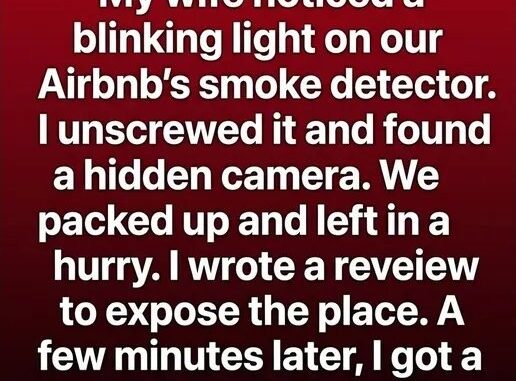
During what was meant to be a tranquil, healing vacation, a couple recently discovered this difficult lesson. Expecting nothing more than a lovely view and a cozy bed, they had reserved a highly regarded hotel. After arriving and settling into their makeshift residence, they started unpacking with the intention of turning it into a haven for the next days. They were idly taking in the living area’s arrangement when they noticed something. A smoke detector in a corner of the ceiling was producing a tiny, repetitive blinking light.
Although indication lights are present on the majority of contemporary smoke detectors, this one appeared to pulse with an unusual intensity. They were so intrigued that they made the decision to investigate more. Their blood raced cold as they examined the gadget on a step stool. There was the definite glitter of a covert camera lens under the casing, carefully tucked away. The thrill of their holiday turned into a horrible reality of violation as soon as they realized the ramifications. In a place where they expected complete seclusion, they were being observed.
The response came right away. They quickly packed their belongings and left the house in search of the security of a neighboring hotel, rather than staying to fight or wait for the host to return. What had been a leisurely journey turned into a hurried, uncomfortable rush to feel secure again. The device itself wasn’t the only traumatic aspect of the revelation; there had also been a serious betrayal of trust.
The pair felt obligated to alert others after they were securely behind a locked hotel door. In an effort to warn prospective visitors about the possible risks present in their rentals, they took pictures of their discovery and posted about it on social media. But when they looked at the pictures they had taken of the rental, the scenario became even more unsettling. When they looked more closely at the pictures of the living room, they saw strange reflections and minute irregularities in the arrangement of other electronic devices that pointed to the existence of at least one additional camera-like device concealed somewhere else in the space. Even if they couldn’t be positive, the suspicion was enough to keep them up all night.
The narrative draws attention to a significant and expanding problem in the hospitality sector. Smart locks, high-speed connected devices, and automated climate management are just a few examples of how technology might improve travel, but there is a chance that it will be used as a weapon by bad actors who see visitors as targets rather than clients. The couple’s incident serves as a sobering reminder that when we pay for a service, we are also entrusting strangers who might not share our moral standards with our personal safety.
Their experience makes all tourists reconsider how vigilant they should be. Checking the plumbing and linens alone is no longer sufficient. Travelers nowadays need to develop into amateur investigators and follow their gut when something doesn’t feel right. It’s time to leave if a gadget seems out of place, if a light blinks in an odd rhythm, or if a room’s design allows an electronic attachment to have an unhindered view of the toilet or bed. No rental, regardless of its five-star rating, is worth sacrificing a person’s fundamental right to privacy; personal comfort and security must always come first.
A more extensive discussion on host accountability has been sparked by this incident. Platforms must impose stringent guidelines on the installation and disclosure of smart home equipment when they permit property owners to install it. Travelers are left vulnerable in the absence of strict regulation and open standards. The simplicity of planning a vacation has greatly surpassed our capacity to protect the privacy of those locations, and unless technology is held to a higher standard of transparency, the onus of caution remains on the visitor.
In the end, the couple’s tale serves as a terrifying warning to all users of rental sites. It serves as a reminder that the most precious resource we possess is our privacy, which may be quickly stolen by a smoke detector’s covert lens. We need to be always vigilant in a world that is becoming more interconnected. The ability to close a door and know that no one is observing from the other side should always come first, and we should never compromise our peace of mind for the ease of an app. Even though this trip ended badly, it taught us an important lesson that will undoubtedly prevent others from suffering the same fate: trust your instincts when in doubt, keep thorough records, and never be scared to leave a place that seems like a trap.
Leave a Reply